
Research in brief: enhancing politicians’ attention through mindfulness practices
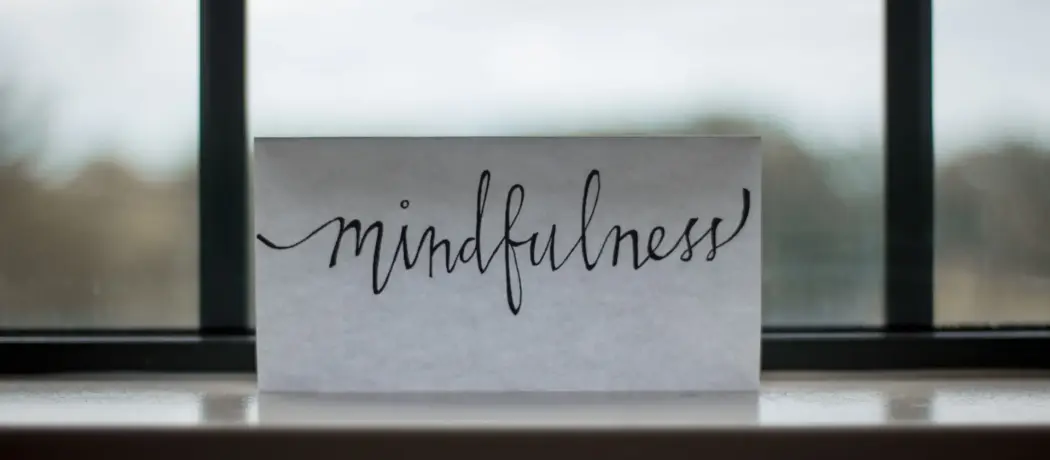
Constant pressure, a never-ending stream of information, overloaded schedules, urgent decisions… In the French National Assembly, taking a step back can be a real challenge. What if mindfulness practices could offer members of parliament and parliamentary assistants the tools to better cope with this demanding environment?

09/28/2026

3 min
Share
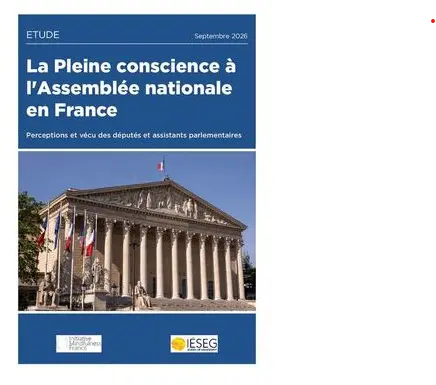
This is the question that IÉSEG School of Management professors Julie BAYLE-CORDIER and Caroline RIEU PLICHON, along with Solenn TYNEVEZ, an IÉSEG graduate, explored in a study conducted in collaboration with the think tank Initiative Mindfulness France.
The objective: to understand how French members of parliament and parliamentary assistants who completed a mindfulness-based stress reduction (MBSR) program perceive the impact on their professional and personal lives, as well as on their decision-making.
IÉSEG research on mindfulness
This research is the result of a collaboration with Initiative Mindfulness France, which works in particular to raise awareness of the benefits of mindfulness in the political sphere. Between 2018 and 2021, eight MBSR sessions were offered at the French National Assembly, bringing together 77 participants, including 42 members of parliament and 31 parliamentary assistants. The qualitative study is based on twelve in-depth interviews with program participants.
Refocusing to make better decisions?
Julie BAYLE-CORDIER notes that the participants’ accounts reveal three major individual benefits: improved concentration, an enhanced ability to prioritize, and a more comfortable relationship with time and uncertainty.
In an environment marked by constant demands, taking a step back becomes invaluable. As one parliamentary aide sums it up: “Mindfulness helps you calm down and, as a result, be more focused.”
A member of parliament also describes a concrete change in her way of working: “I spread myself thinner less often; I choose my battles; I choose the issues.”
A “bubble” beyond political divides
The study also highlights a collective dimension. The sessions created a space where political roles and divisions could momentarily fade away. One participant described it as a “bubble,” a moment “outside of political time,” where “everything else was set aside.” Participants also reported greater benevolence, trust, and quality in interpersonal relationships, including between members of different parties.
The study, however, also highlights several barriers to the adoption of mindfulness. Despite growing interest, the practice is sometimes still associated with an image considered “strange” or even “whimsical,” particularly in the political sphere.
Considering these barriers, the researchers emphasize that legitimizing the practice through the endorsement of recognized figures, such as psychiatrist Christophe André—who was present at the National Assembly to present the scientific benefits of the practice—is key to strengthen credibility and encourage adoption.
The study therefore recommends continuing to raise awareness, expanding research, ensuring the quality of instructor training, and providing long-term support for the practice.
The full study is available in French on the IMF website.
Contributors


Discover more Insights
Management & Society

Left‑handed people tend to be left‑leaning voters
02/10/2026
6 min
Economics & Finance
In brief: Why are less people having children in France?
17/09/2026
4 min

CSR, Sustainability & Diversity
Partnerships between government, business and civil society are often tense: 3 tips on how to manage them
15/09/2026
6 min

CSR, Sustainability & Diversity
Geopolitical risks: What impacts and strategic responses for companies?
07/09/2026
4 min