
What are the principles and challenges of banking regulation?

10/21/2026

6 min

Share
Banks may have been regulated in one form or another for hundreds of years, but modern international banking regulation as we know it today has only been in place for a few decades. Yann BRAOUZEC, professor and Director of the IQUANT research centre, has just published a new *book in French analysing the fundamentals of banking regulation and the current challenges. In this interview, he discusses some of the key aspects of his book and the challenges facing regulation in a sector that is undergoing transformation.
Why publish this book now?
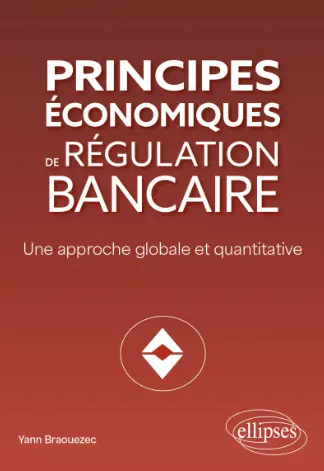
Y.B: The idea to publish the book stems from a dual objective which is linked to my teaching and research experience: firstly, to present and explain the financial data drawn from banks’ annual reports and regulatory publications (Pillar 3); and secondly, to analyse the economic foundations that underpin prudential regulation (banking regulation).
To my knowledge, no other book on the subject uses this combined approach: one that is both comprehensive — to capture the full complexity of a banking group — and quantitative, in order to assess the quantitative (numerical) impact of losses on solvency ratios.
I have been teaching banking regulation and related courses for over 20 years, so I wanted to write my book using this approach.
The publication is aimed not only at students in economics, management or engineering, but also at professionals from the banking sector and anyone wishing to understand the mechanisms of banking regulation.
Nearly 20 years after the 2008 financial crisis, we have since experienced further financial instability, such as the collapse of SVB. Do you think that the ‘Basel III’ banking regulations introduced in Europe have delivered on their promises?
Y.B: I devote an entire paragraph in my book to the US bank SVB (Silicon Valley bank), which is a textbook case. I regularly tell my students that if someone had told me 10 years ago that a bank like SVB would make a loss of nearly 20 billion dollars and go bankrupt because it had failed to hedge against interest rate risk, I wouldn’t have believed it!
In Europe, as part of the supervisory review and evaluation process, the European Central bank (ECB) requires additional capital (known as P2R), to cover the risk of losses linked to changes in interest rates.
P2R therefore complements the capital anticipated to absorb losses linked to ‘major risks’ such as credit risk – the most significant – but also market and operational risk. This P2R ‘buffer’, which applies to banks supervised by the ECB, is publicly available on the ECB’s website.
Basel III is a universal regulatory framework that has been thoroughly overhauled. Regulators have also addressed the weaknesses of Basel II, notably by limiting or better regulating the use of banks’ internal models, which are used to calculate regulatory capital requirements.
These models, generally developed and used by large banks, serve, for example, to estimate risk-related parameters (probability of default, loss given default, volatility, etc.) or to value certain financial instruments.
From this perspective, prudential regulation is unique and challenging, as it involves, in the case of large banks, a capital requirement based on internal models.
Granting (large) banks too much freedom will result in (and, in reality, has resulted in) an underestimation of risks and, consequently, of regulatory capital. However, not granting enough freedom leads to excessive rigidity in risk estimation and will penalise banks that use ‘more sophisticated’ models to estimate these risks. A balance must therefore be struck, which is no easy task.
Under Basel III, banks must comply with a leverage ratio – a capital ratio that is not risk-based and thus limits model risk – as well as a minimum capital ratio, which limits the ‘benefits’ they can derive from using their internal models in relation to regulatory capital.
Furthermore, (large) banks are required to comply with liquidity ratios and so-called ‘resolution’ ratios, which relate to the organisation of their resolution (bail in) in the event of failure – a process designed to avoid the use of public funds (bail out).
In this regard, large banks classified as being ‘important’ to the global banking system are also subject to a capital surcharge based on a specific methodology. None of these instruments existed under Basel II, which is why I say that banks are much better regulated (and also much better capitalised) under Basel III. In this sense, Basel III has delivered on its promises, even if there is scope to improve certain provisions here and there.
What was the main challenge in making such a technical subject understandable to a finance student whilst remaining relevant to professionals working in the banking sector?
Y.B: The answer is simple: using the regulatory texts themselves as a starting point, along with the official documents published by the banks (annual reports and Pillar 3 disclosures).
This allows the book, I hope, to remain relevant to industry professionals, whilst also – and this was my aim – providing a comprehensive overview of banks and, in particular, banking groups.
With this in mind, I wanted to devote an entire chapter to IFRS standards (The International Financial Reporting Standards, which have evolved since the 2008 financial crisis) – specifically those applicable to publicly listed groups. Here, I explain the role of valuation models/methodologies for certain types of financial instruments for which there is no market price or, where a market price does exist, there is not sufficiently (market) liquidity, meaning that the price is not a reliable indicator.
Under IFRS, these instruments are referred to as Level 2 or Level 3 assets and, from an accounting perspective, must of course be valued.
A price – that is to say, a value – must therefore be determined, and this requires the use of a valuation model, whether simple or complex. As I am not a specialist in bank accounting, it was a significant challenge for me to write the section of this chapter devoted to IFRS standards. As I mention in the book – the notes to the consolidated financial statements of French banks are an excellent source of information, without which I would not have been able to write part of this chapter.
Another challenge was to divide the book into coherent chapters whilst following a ‘logical’ progression.
Generally speaking, this book does not use mathematical methods any more sophisticated than those covered in a sixth-form maths course so the book is therefore aimed at a wide audience, including students at business or engineering schools, as well as professionals in the sector who are looking to gain a broad overview.
The book offers a clear and concise analysis of the Basel Accords, which are essential for understanding banking regulation and its contemporary challenges. It covers the fundamentals of the banking sector, the risks associated with lending and markets, as well as developments since 2008, notably IFRS standards and the macroprudential foundations of Basel III.
Contributor

Discover more Insights

Economics & Finance

In brief: Why are less people having children in France?
17/09/2026
4 min

Economics & Finance
In brief: researchers study impact of audit employee turnover in a private company setting
18/08/2026
3 min

CSR, Sustainability & Diversity
ESG performance: what is the influence of ESG rating providers?
24/07/2026
4 min

Economics & Finance
Frequency of financial reporting: developments in the US and lessons from the European perspective
02/07/2026
5 min