
Climate policies: The swing group that decides over their fate
A large-scale international study conducted in 13 EU countries finds that the political fate of climate policy proposals is determined not by the loudest but rather by a large group in between. This group is neither always for or against, and their support shifts depending on the climate policy – often determining whether a policy has majority support.

03/18/2026

6 min

Share
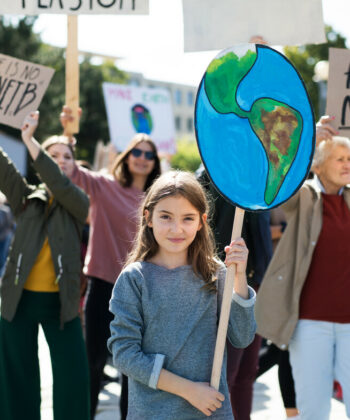
Image: The conditional middle often tips the balance (Pexty Design)
- As part of the Horizon Europe project Capable, researchers surveyed around 19,000 people from 13 European countries on 15 specific climate proposals in the summer of 2024. The aim was to find out how much support there is for the different climate change proposals and what factors influence opinions.
The climate measures currently in place are unlikely to meet Paris Climate Agreement targets. Whether further political measures can move closer to the goal of limiting global warming to 1.5 degrees and combating climate change depends heavily on public opinion and political support.
A team of researchers led by Dr. Keith Smith (ETH Zurich), in collaboration with professors from IÉSEG School of Management and CNRS and INRAE researchers at the Lille Economie et Management laboratory (CNRS/IÉSEG School of Management/ University of Lille) and Bureau of Theoretical and Applied Economics (CNRS/Université de Lorraine/Université de Strasbourg/INRAE) – including Loïc Berger, a CNRS researcher and co-author of the study – conducted a large survey in 13 EU countries to find out which measures are more and less politically acceptable, and why.
The study aimed not only to gauge the opinions and attitudes of the population, but also to accurately capture the fundamental stance of participants towards climate policy. This resulted in four profiles: supporters, neutrals, opponents, and a crucial block, which this study calls the “conditional middle”. Amongst those surveyed, 36 percent are supporters, in favour of most climate proposals, and 21 are opposers, largely against climate proposals.
But, a large group, 33 percent of respondents, are the conditional middle, who are much more flexible, form their opinion based on the individual climate policy itself, and do not have a predetermined disposition for or against it. Accordingly, the study therefore focuses on this critical swing group to understand what shapes their climate policy preferences, and what this means for voting behaviour. People with neutral opinions to climate proposal make up the remaining 10 percent of respondents.
Most important factor: the personal cost-benefit balance
The most decisive factors in determining whether the conditional middle group will support a policy is their personal cost-benefit calculations. Across Europe, people prefer policies that make it easier for people and businesses to make pro-climate changes, like government support and subsidies, over those that have more visible financial impacts such as consumer-facing taxes, or behavioural restrictions. This is particularly the case for the conditional middle, where the expected costs and benefits are at the forefront of what drives their policy preferences, overriding commonly discussed factors such as party affiliation, climate attitudes, and socio-demographic factors such as income, place of residence or level of education.
People are enthusiastic about policies that support making pro-climate adjustments, rather than complete bans. For example, a proposed general ban on cars with combustion engines was rejected by 73 percent of the conditional middle. However, if the proposal is worded in such a way that replacement with synthetic fuels is possible, the rejection rate drops to only 39 percent.
Loïc Berger, who is also Director of the IÉSEG Research Center on Risk and Uncertainty, highlights that the elasticity amongst this group is very notable and highlights how crucial the proposal specifics can be in determining its acceptance by the public.
Climate funds: People want visible benefits
The study also shows that the population would prefer to see revenue generated from climate funds, such as the EU Emissions Trading System, invested in adaptation projects, like investments in green technologies or low-emission transport services, and compensation measures for individual households. Surprisingly, however, compensation payments for workers at risk from climate change are considered less important. This is particularly noticeable among the conditional middle group, which prefers to invest the funds in visible and public services.
Reason for hope
The authors further investigated the potential impact of small, and plausible, shifts within the conditional middle group. If the share of the conditional middle that were “unsure” about a policy shifted toward “support”, the number of proposals with majority backing could rise substantially — from 4 out of 15 to 10 out of 15.
Loïc Berger highlights the importance of these results for policymakers:
“These simulations show that the feasibility of climate policies depends not only on their ambition but also on their ability to convince conditional voters. In Europe, this group represents a critical mass large enough for certain contested measures to generate stable majorities, provided they are adapted to this group’s expectations.”
Study design allows for more targeted research
Another important achievement of the study, according to Smith, is its innovative design. The responses of the participants were compared on two axes in order to measure both the distribution within the population and to determine how consistent their responses were. Smith and his team created a profile of the population for each of the templates and an opinion profile for all participants. This enabled the research team to analyse precisely which type of template was most popular with which voter group.
Loïc Berger adds that this methodology could also be applied to other national contexts. In France, where debates on climate policies are particularly intense, such an approach would allow for the precise identification of measures that are most likely to win over the “conditional middle” – the key group that often swings majorities.
Bibliography
Smith K, Mlakar Z, Levis A, Sanford M, et al. Climate Policy Feasibility across Europe Relies on the
Conditional Middle. Nature Climate Change. 11.03.2026. Online: https://www.nature.com/articles/s41558-026-02562-8
Capable and Horizon Europe
Capable is a political science EU research project within the framework of Horizon Europe, which ran from 2023 to the end of 2025. With around €3 million in funding, the consortium, led by the Euro-Mediterranean Centre on Climate Change (CMCC), investigated which climate measures are socially acceptable and politically feasible. Capable aims to promote knowledge about climate policy through targeted analyses and to actively seek solutions to climate issues in politics together with voters, politicians and other stakeholders. To this end, Capable takes an interdisciplinary approach drawing on economics, political science, social sciences and environmental sciences. Around 15 institutes participated in the study, including IÉSEG, CNRS, ETH Zurich, the University of Groningen, and the Polytechnic University of Milan.
Further information: https://capableclimate.eu/
Contributors


Discover more Insights

CSR, Sustainability & Diversity

Climate Policy: Is it time to downsize the COPs?
07/11/2025
3 min

Big Data & AI
Vote for the 5 topics you would like us to cover more often
18/09/2025
1 min
CSR, Sustainability & Diversity
The climate policies that EU citizens like (and those they don’t)
16/09/2025
4 min

CSR, Sustainability & Diversity
Why do many shared mobility providers struggle to attract car drivers?
23/03/2025
4 min